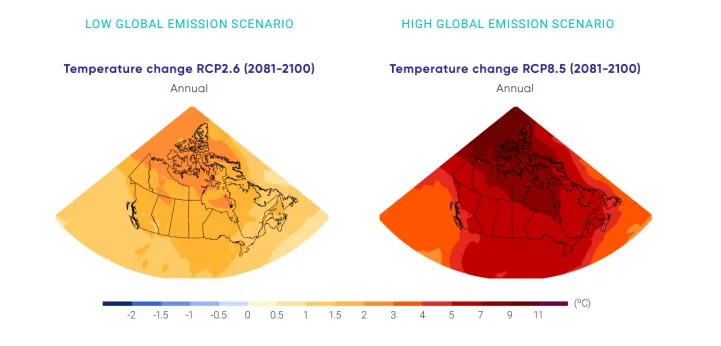
Canada is experiencing substantial long-term changes in temperature, precipitation and seasonal weather patterns, according to a national scientific assessment published in September 2026. Canada’s Changing Climate Report 2026 brings together evidence from observations and peer-reviewed scientific research to examine how the country’s climate has evolved and what changes may occur in the future. The report was developed with contributions from more than 100 Canadian experts working in government and academic institutions, providing an updated scientific foundation for understanding environmental conditions across the country.
Advertisement
The assessment finds that Canada has warmed by approximately 2.0 degrees Celsius over the period examined, while northern Canada has experienced an increase of about 2.6 degrees. Since 1970, the country has warmed at nearly twice the global average rate, with the Canadian Arctic warming approximately three times as quickly as the global average. These differences are significant because northern environments are especially sensitive to changes in snow cover, sea ice and frozen ground. Rising temperatures can alter ecosystems, affect infrastructure and create new challenges for communities that depend on predictable seasonal conditions.
Scientists also identified changes extending well beyond average temperatures. Across Canada, annual precipitation has increased over the past 75 years, with particularly substantial percentage increases in northern regions. The report describes a broader pattern involving more extreme heat, fewer episodes of extreme cold, longer wildfire seasons, changes in river flow and declining snow and ice cover. Glaciers are thinning, permafrost is thawing and surrounding oceans are warming. Although the magnitude of these changes varies by region, the combined evidence indicates that the effects of climate change are geographically widespread.