Home Politics
Category:

Politics

Advertisement

Canada’s latest employment figures indicate a softer labour market as economic policymakers assess the effects of inflation, international trade uncertainty and changing business conditions. According to Statistics Canada’s Labour Force Survey, released on October 9, employment declined by 0.3% in September 2026, while the national unemployment rate increased to 6.5%. The results provide an updated picture of economic conditions ahead of the Bank of Canada’s next scheduled interest rate announcement later this month.

The employment figures come at a time when Canadian businesses and households are adapting to several sources of economic pressure. International trade restrictions have created uncertainty for companies dependent on cross-border commerce, while elevated energy prices have contributed to consumer inflation. These developments affect different sectors in different ways. Export-oriented businesses may be particularly sensitive to changes in market access, while households continue to face financial pressures connected to transportation, housing and everyday purchases.

On September 2, the Bank of Canada maintained its target overnight interest rate at 2.25%. In explaining that decision, the central bank pointed to inflation risks and uncertainty surrounding the economic outlook. It reported that consumer price inflation had been near 3% in recent months, partly reflecting higher gasoline prices. At the same time, measures of underlying inflation remained closer to the bank’s 2% target, illustrating the importance of examining several indicators rather than relying on a single headline figure.


Pages: 1 2

Advertisement

Canada has joined seven international partners in issuing a statement reaffirming support for the International Criminal Court, placing international judicial independence at the centre of a renewed diplomatic discussion. The declaration, published on October 9, 2026, was supported by the foreign ministers of Canada, Denmark, Germany, France, Italy, Japan, the Netherlands and the United Kingdom. The participating governments emphasized the importance of maintaining the court’s ability to perform its responsibilities under the Rome Statute.

The statement followed an announcement concerning United States sanctions directed at the court. The eight governments expressed disagreement with the proposed measures and raised concerns about their potential consequences for the institution’s operations. Their position focused on protecting the court’s independence and its capacity to conduct judicial proceedings. The declaration also acknowledged the possible effects of sanctions on court personnel and their families, as well as on the institution’s ability to carry out its mandate.

The International Criminal Court was established to address certain categories of serious international crimes, including genocide, crimes against humanity and war crimes. Its jurisdiction is governed by the Rome Statute and related legal requirements. The court does not replace national judicial systems; instead, it operates within a framework designed to address situations in which relevant conditions for international jurisdiction have been met. The institution’s authority, procedures and relationship with national governments have remained subjects of international legal and diplomatic debate.

Pages: 1 2

Advertisement

Canada and the United States are navigating another period of uncertainty in their economic relationship as discussions continue over trade barriers and the future operation of the Canada–United States–Mexico Agreement, commonly known as CUSMA. The agreement, which came into force in July 2020, established a framework governing trade and investment among the three North American partners. Its first scheduled joint review took place in 2026, providing an opportunity to examine how existing rules are functioning and whether changes may be required.

The review has attracted particular attention because Canadian industries rely heavily on predictable access to the American market. Automotive manufacturing, agriculture, energy production and industrial supply chains are closely connected across the border. Tariffs and other restrictions can therefore create challenges for companies operating in both countries, particularly when production depends on materials or components moving through several jurisdictions before reaching consumers.

Canada’s federal government has maintained consultations with provincial and territorial representatives as part of its approach to cross-border trade. In July, Canadian officials reported on discussions connected to the CUSMA review, emphasizing the importance of coordination among governments. Public consultations conducted earlier also demonstrated considerable interest among businesses, industry organizations and individual Canadians in maintaining a predictable trading environment while addressing emerging economic risks.

Pages: 1 2

Advertisement

Municipal elections are approaching across Ontario, with voters scheduled to choose their local representatives on October 26, 2026. The elections will determine the composition of municipal councils and school boards in communities throughout the province. Although municipal campaigns often receive less national attention than federal or provincial elections, the results can influence decisions that affect residents directly, including land use, local infrastructure, public transportation and community services.

Candidates are presenting different approaches to challenges facing their municipalities. Housing affordability, neighbourhood development, road maintenance, public safety and the management of local finances are among the issues receiving attention in many communities. The responsibilities of municipal governments vary according to provincial legislation and local arrangements, meaning the priorities in a large urban centre may differ considerably from those in smaller towns or rural areas.

Election administration is also an important part of the process. The Ontario government has advised residents to confirm their voter information and consult their municipal clerk when changes are required. Municipalities may offer different voting methods, including in-person ballots, internet voting or other approved arrangements. Residents should therefore rely on instructions issued by their own municipality rather than assuming that voting procedures are identical across the province.

Pages: 1 2

Advertisement

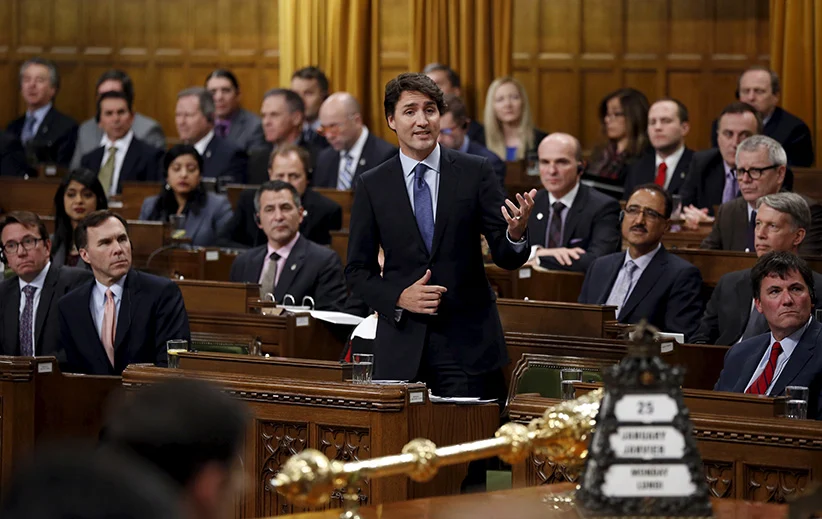
Canada’s House of Commons is preparing to resume its regular sitting schedule on October 19, following a parliamentary break that began after the first full week of October. The return will provide federal lawmakers with another opportunity to examine legislation, question government ministers and discuss issues affecting Canadian households and businesses. Economic conditions, infrastructure development and the cost of living are expected to remain important subjects as Parliament continues its autumn session.

One measure attracting attention is Bill C-39, formally titled An Act respecting certain measures to strengthen the economy. On October 8, the House of Commons approved the bill at second reading, allowing it to advance to further parliamentary consideration. The vote represented an important procedural step rather than final approval. Before legislation can become law, it must complete the remaining stages of parliamentary review and receive the necessary approvals.

The broader discussion surrounding economic legislation reflects competing priorities in federal policymaking. Supporters of measures intended to accelerate economic activity emphasize investment, productivity and the importance of efficient regulatory processes. Others have raised questions about consultation, environmental oversight and how proposed changes could affect workers and local communities. These considerations illustrate why parliamentary scrutiny remains significant even after a bill receives support in an initial vote.

Pages: 1 2

Advertisement

About us

logo

Disclaimer

The information published on this website is provided for general informational purposes only. While we strive to ensure accuracy and keep our content up to date, we cannot guarantee that all information is complete or error-free. Opinions expressed in articles belong to their respective authors and do not necessarily reflect the views of the editorial team. Content may be updated or corrected as new information becomes available.